
Subclinical atrial fibrillation – detection and anticoagulation in the wearable device era

Atrial fibrillation is a key risk factor for stroke, with the risk reduced by anticoagulation in selected patient groups. Wearable devices have led to increased detection of subclinical atrial fibrillation, but the clinical implications for anticoagulation remain uncertain. Guidelines, device accuracy and treatment thresholds will shape how device-detected atrial fibrillation influences practice.
- Subclinical atrial fibrillation (AF) is associated with an increased risk of stroke, but the threshold at which treatment should be started remains uncertain.
- International guidelines differ: European Society of Cardiology and American College of Cardiology/American Heart Association/American College of Chest Physicians/Heart Rhythm Society recommendations vary in how AF duration and baseline stroke risk are weighed when considering anticoagulation.
- Wearable and mobile technologies, including photoplethysmography and on-demand single-lead ECG, can detect AF with high diagnostic accuracy, but translating detection into treatment decisions is not always straightforward.
- Shared decision making is central to aligning therapy with an individual’s risk profile, preferences and values in device-detected AF.
- As these tools become more accessible, personal and remote monitoring is likely to reshape AF management, particularly in rural and primary care settings.
Atrial fibrillation (AF) has been recognised for more than 100 years and is associated with an increased risk of embolic (cerebrovascular and systemic) events. Initiation of anticoagulation therapy significantly reduces this risk in appropriately selected patients. The growing availability of wearable heart-monitoring devices continues to provide information on heart rate and rhythm in nonhospitalised patients, enabling increased detection of arrhythmias such as subclinical atrial fibrillation. However, there remains a lack of clarity in the guidelines, with ongoing debate about what constitutes an AF event that is ‘clinically relevant’ enough to begin treatment.
This article reviews current international guidelines for AF management, the clinical significance of subclinical AF and the diagnostic performance of wearable heart-monitoring devices. It examines emerging evidence on AF burden and treatment thresholds to identify what additional information is required to support future decision making.
Current guidelines on AF
Two major guidelines for AF management are currently available: the 2024 European Society of Cardiology (ESC) guideline and the 2023 American College of Cardiology/American Heart Association/American College of Chest Physicians/Heart Rhythm Society (ACC/AHA/ACCP/HRS) guideline.
The ESC guideline uses the four pillar AF-CARE framework, defined as:
- Comorbidity and risk factor management
- Avoid stroke with anticoagulation
- Reduce symptoms through rate and rhythm control
- Evaluation and dynamic reassessment.1
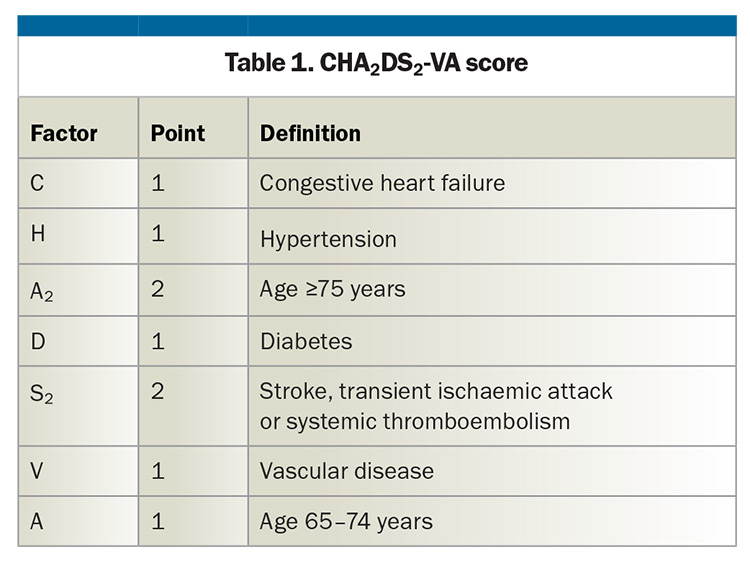
The CHA₂DS₂-VASc score is a validated tool used for estimating annual stroke risk in patients with AF. It considers congestive heart failure or left ventricular dysfunction, hypertension, age, diabetes, prior stroke or thromboembolism, vascular disease and sex. The ESC has recently modified this score by removing the female sex category component, resulting in the CHA₂DS₂-VA score (Table 1). A score of 2 or more indicates the need for anticoagulation and a score of 1 warrants consideration of anticoagulation.
Diagnosing AF under the ESC guideline requires ECG documentation, which can be obtained from a 12-lead, single-lead or multilead ECG. AF is defined as supraventricular tachycardia characterised by ECG changes including absence of discrete P waves, irregularly irregular R–R intervals and fibrillatory baseline atrial activity lasting longer than 30 seconds. In patients with wearable photoplethysmography (PPG) devices, nonvitamin K oral anticoagulant (NOAC) therapy may be considered in subgroups of patients with asymptomatic AF who have a high estimated stroke risk and no major bleeding risk factors, once confirmed by formal ECG.
However, the ESC guideline does not define the burden of AF that would meet the anticoagulation threshold, given that only class IIb evidence (usefulness is less well established and the intervention may be considered) is available. The guideline acknowledges that the risk of developing clinical AF may be as high as 6 to 9% annually if subclinical AF is detected.1,2
The ACC/AHA/ACCP/HRS guideline recommends anticoagulation for patients with an annual stroke risk of 2% or higher, and considers it reasonable for those with a risk of 1 to 2%, based on the standard CHA₂DS₂-VASc score.
According to the ACC/AHA/ACCP/HRS guideline, anticoagulation for device-detected atrial fibrillation is guided by episode duration and stroke risk:
- episodes lasting 24 hours or more with CHA₂DS₂-VASc score of 2 or more: anticoagulation is reasonable (class IIa evidence; the weight of evidence is in favour of usefulness and the intervention should be considered)
- episodes lasting five minutes to 24 hours with CHA₂DS₂-VASc score of 3 or more: anticoagulation may be reasonable (class IIb evidence)
- episodes lasting less than five minutes: no clear indication for initiation of anticoagulation.
This approach highlights the increasing recognition and importance of subclinical AF, while acknowledging gaps in the current literature.3
Both guidelines recognise bleeding risk scoring systems, including HAS-BLED (Hypertension, Abnormal liver or renal function, Stroke history, Bleeding history or predisposition, Labile international normalised ration, Elderly, Drugs or alcohol), HEMORR₂HAGES (Hepatic or renal disease, Ethanol abuse, Malignancy, Older age, Reduced platelet count or function, Rebleeding risk [double points], Hypertension, Anaemia, Genetic factors, Excessive fall risk, Stroke), and ATRIA (Anticoagulation and Risk Factors in Atrial Fibrillation) scores. The HAS-BLED score has been shown to predict bleeding risk more accurately than many other tools; scores range from 0 to 9, with 3 or more indicating high bleeding risk, warranting caution and regular review.4,5 However, interpretation of bleeding risk scores requires clinical judgement because several variables overlap with stroke risk factors, and these scores alone should not determine anticoagulation decisions.
Subclinical AF
AF is the most common cardiac arrhythmia in adults and increases stroke risk fivefold.6 Anticoagulation reduces stroke risk by 64% and mortality by 25%.7 Without implantable loop recorder monitoring, 20 to 40% of ischaemic strokes remain cryptogenic, with a high clinical suspicion for subclinical AF.8,9
AF is not always sustained or symptomatic, and brief episodes may be missed on routine testing. Consequently, multiple studies have evaluated extended monitoring strategies to detect subclinical AF, and some have also assessed whether detection followed by anticoagulation improves clinical outcomes.
The Early Treatment of Atrial Fibrillation for Stroke Prevention Trial (EAST-AFNET 4) showed that early detection of AF and subsequent rhythm control in patients with newly diagnosed AF (present for one year or less before enrolment) reduced the composite primary endpoint of stroke and cardiovascular death, reinforcing the importance of early detection.10
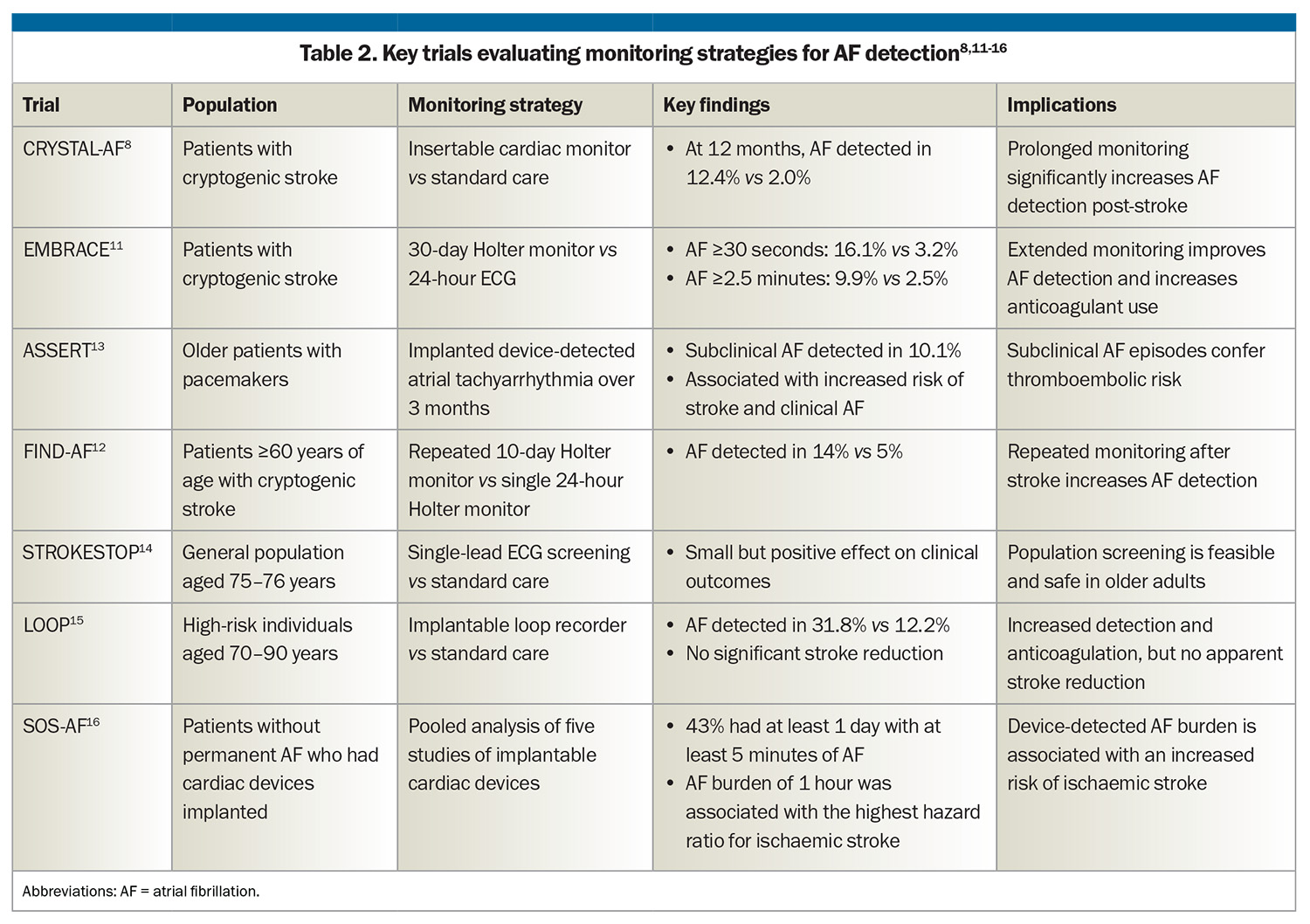
The Cryptogenic Stroke and Underlying Atrial Fibrillation (CRYSTAL-AF), Event Monitoring Belt for Recording Atrial Fibrillation After a Cerebral Ischemic Event (EMBRACE) and Future Innovations in Novel Detection of Atrial Fibrillation (FIND-AF) trials examined subclinical AF in patients with recent stroke and no history of AF, confirming that prolonged monitoring detects more subclinical AF.8,11,12 The Asymptomatic Atrial Fibrillation and Stroke Evaluation in Pacemaker Patients and the Atrial Fibrillation Reduction Atrial Pacing (ASSERT) trial assessed patients without a history of stroke who were monitored with a permanent pacemaker and reported similar findings.13
Two additional trials, Systematic ECG Screening for Atrial Fibrillation Among 75 Year Old Subjects in the Region of Stockholm and Halland, Sweden (STROKESTOP) and Implantable Loop Recorder Detection of Atrial Fibrillation to Prevent stroke (LOOP), examined subclinical AF detection rates and initiated anticoagulation. STROKESTOP screened patients without a previous history of AF and initiated anticoagulation in those with AF detected, showing a small net benefit compared with standard practice.14 Conversely, LOOP monitored patients with an implantable loop recorder and initiated NOAC therapy in those with AF episodes lasting six minutes or longer. It found a threefold higher AF detection rate in those monitored with the device, but no significant reduction in stroke or systemic embolism despite anticoagulation.15
The Stroke Prevention Strategies based on Atrial Fibrillation information from implanted devices (SOS-AF) study evaluated patients with pre-existing implantable cardiac devices, examining AF duration and stroke risk. AF burden independently predicted ischemic stroke, with a one-hour burden associated with the highest hazard ratio. These findings were statistically significant, although the sample size was small.16
The Intensive Heart Rhythm Monitoring to Decrease Ischemic Stroke and Systemic Embolism (FIND-AF2; Clinical Trial Number: NCT04371055) trial is currently underway in Germany. It is investigating initiation of NOAC therapy in post-stroke patients with no previous history of AF who develop confirmed subclinical AF on extended monitoring, with results expected in 2027.
A summary of several trials evaluating strategies for AF detection is shown in Table 2.8,11-16
Wearable devices for AF detection
A significant driver of increased awareness of subclinical AF has been the availability of wearable devices capable of detecting AF. These devices are marketed as accurate and reliable tools for detecting arrhythmias, with most relying on PPG for detection.
PPG estimates pulse pressure signals generated by blood flow through the vasculature, using a light-emitting diode and photodiode sensor. It operates in two modes: transmission and reflectance. Transmission mode, frequently used in clinical settings, places a photodetector opposite a light source, typically at the fingertip or earlobe, to detect light transmitted through tissue.17 Reflectance mode, more suitable for wearable devices, positions the light source and photodetector on the same side to capture reflected light from tissues, enabling continuous ambulatory monitoring.18
AF produces irregular pulse intervals and pulse morphologies that can be detected by analysing PPG signals. However, motion artefact can degrade signal quality, particularly during mobile use. To mitigate this, wearable devices often incorporate accelerometry to identify and exclude corrupted segments.19
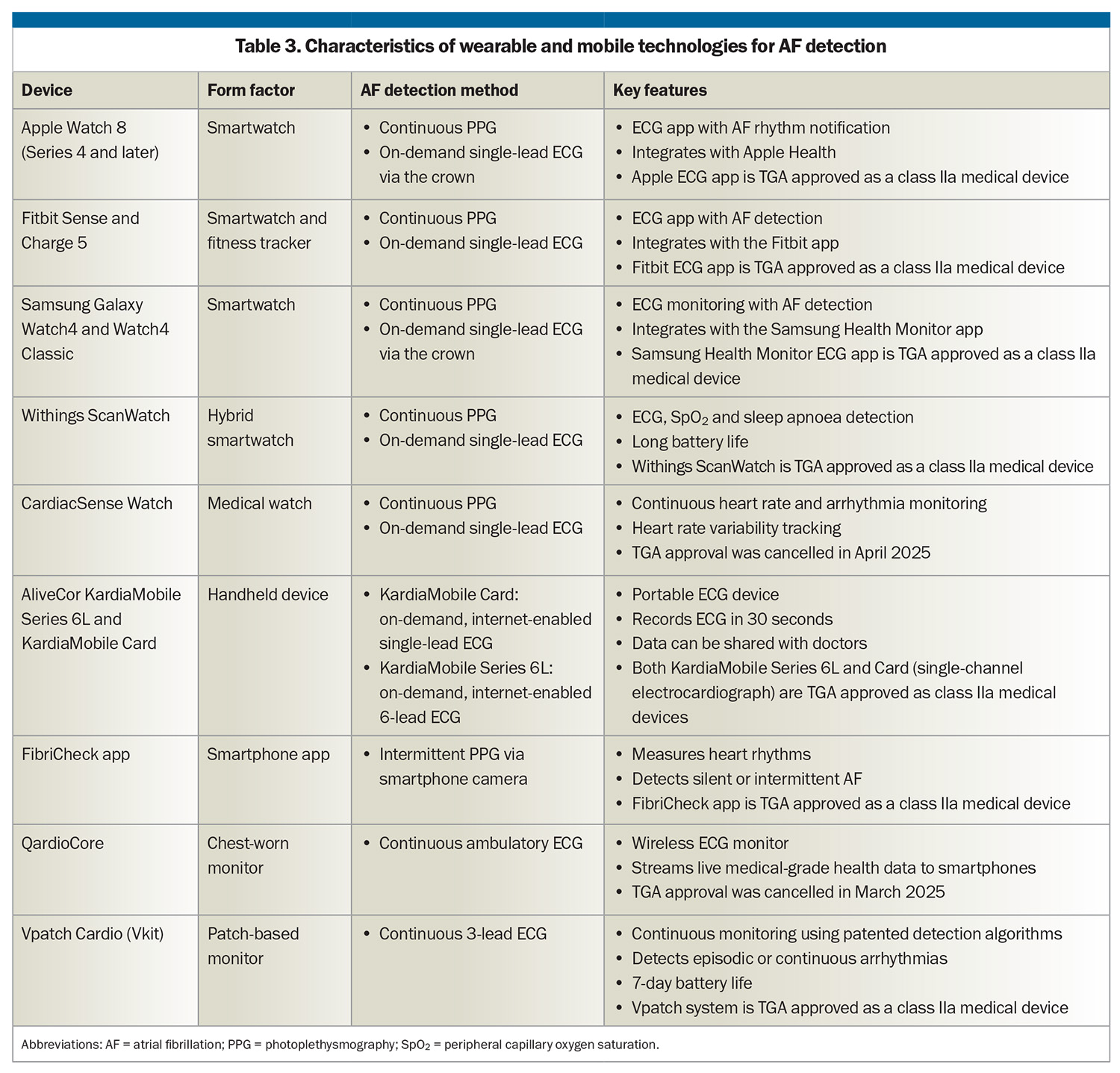
The TGA has approved several devices, including continuous and intermittent types such as watches with single-lead ECG electrodes in the crown, touch-sensitive pads, chest-worn monitors, continuous three-lead patches and mobile six-lead ECG pads (Table 3). Smart wearable rings can perform similar functions, but they are not TGA approved for AF detection.
Several studies have evaluated the diagnostic accuracy of wearable devices for detecting AF, and reported high positive predictive values (Table 4).20-25 Most trials were conducted among nonhospitalised, randomly selected participants with unknown medical backgrounds who had access to the wearable device (Fitbit, Huawei, Apple) and a smartphone, supporting external validity. Despite the low number of AF detections, overall device performance was strong, with findings corroborated across multiple trials.
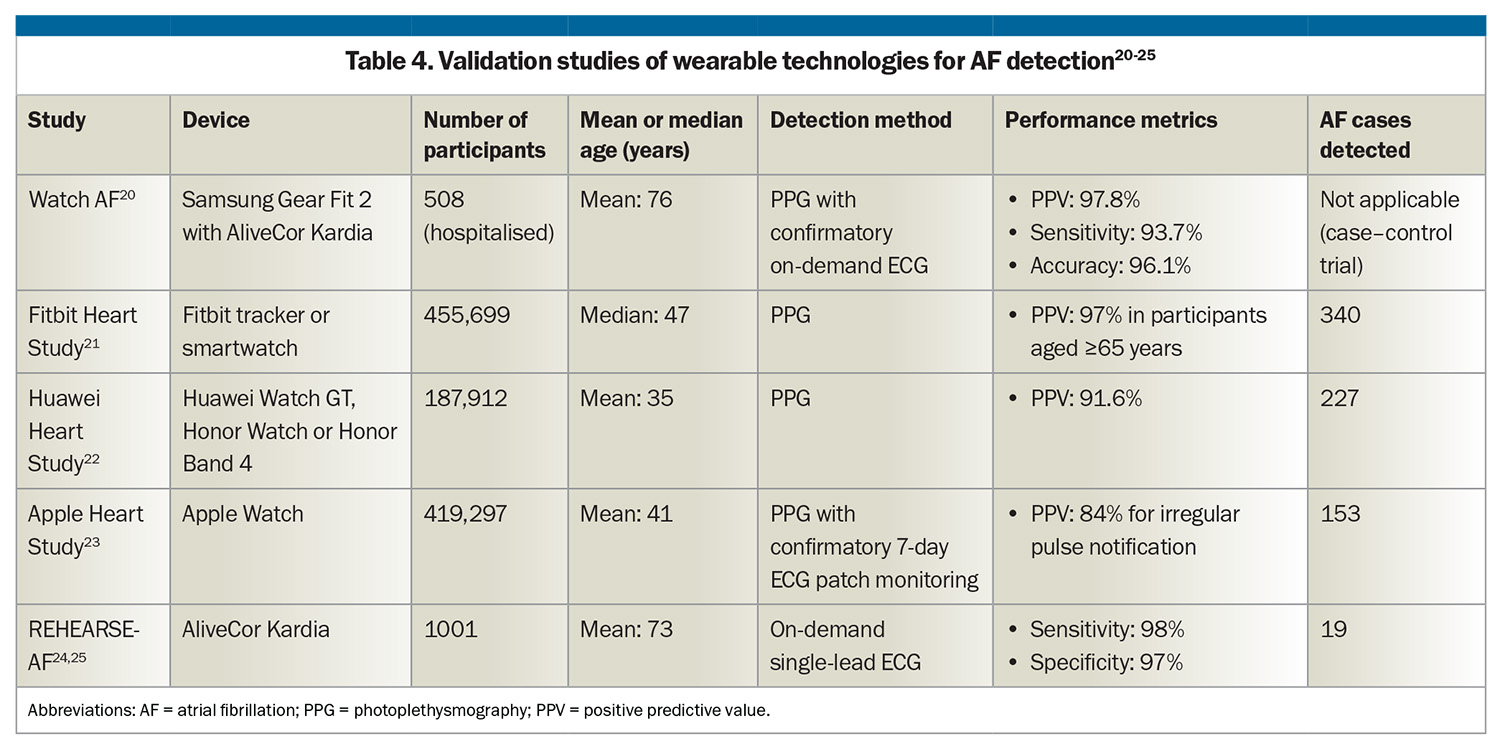
In the Assessment of Remote Heart Rhythm Sampling Using the AliveCor Heart Monitor to Screen for Atrial Fibrillation (REHEARSE-AF) study, patients were randomised to either receive twice-weekly monitoring with a single-lead mobile ECG device (AliveCor Kardia) or routine care over a 12-month period. It found that participants monitored with the AliveCor Kardia device were significantly more likely to have incident AF identified.24,25
The Smartwatches for Detection of Atrial Fibrillation (Watch AF) trial differed in that it assessed hospitalised patients with a history of AF. Patients underwent a one-minute PPG recording using the Samsung Gear Fit 2, a commercially available smartwatch, followed by an internet-enabled mobile ECG using the AliveCor Kardia. Built-in device algorithms were used to analyse PPG data, and this was compared with cardiologist-reviewed mobile ECGs. The study found a very high diagnostic accuracy with the AliveCor Kardia system, demonstrating a positive predictive value of 97.8% and a sensitivity of 93.7%, and it has been recognised as an appropriate screening tool for AF by the European Heart Rhythm Association.20,26 Participants did not undergo formal 12-lead ECG, and those with pacemakers or implanted defibrillators were excluded. This trial demonstrated the efficacy of wearable devices for AF detection.
Despite promising accuracy results, these studies have limitations. First, in trials such as the Apple, Huawei and Fitbit Study, because participants were younger than the typical age at AF onset, AF incidence was low. Second, some devices do not provide continuous monitoring, which can lead to missed subclinical AF episodes. Third, there is no ongoing calibration and quality control for specific ECG mechanisms beyond routine manufacturer servicing provided by the wearable devices. Finally, large datasets often include recordings that cannot be interpreted because of artefact or trace inconsistencies. Excluding these segments reduces effective monitoring time and may result in missed episodes in real-world use. It can also lead to higher detection rates if large portions of data are discarded.
Wearables may also increase patient anxiety through ongoing notifications about heart rate and potential arrhythmia detection. This can affect mental health, and contribute to overdiagnosis and unnecessary anticoagulation in specific patient cohorts, such as false-positive detections because of ectopic beats or sinus arrhythmia, noting that not all outputs are clinically validated.
Threshold for treatment
The central challenge is determining how much AF is clinically significant enough to warrant treatment.
The Nonvitamin K Antagonist Oral Anticoagulants in Patients with Atrial High Rate Episodes (NOAH-AFNET 6) trial investigated whether oral anticoagulation with edoxaban (not currently available in Australia) benefits patients aged 65 years or older with atrial high-rate episodes lasting at least six minutes and an additional stroke risk factor.27 Although the median atrial high-rate episode duration was 2.8 hours, edoxaban did not significantly reduce the composite outcome of cardiovascular death, stroke or systemic embolism compared with placebo. However, it was associated with an increased incidence of major bleeding or death, which led to early trial termination. This limited statistical power and reduces generalisability, including to other NOACs.
The Apixaban for the Reduction of Thrombo-Embolism in Patients With Device-Detected Sub-Clinical Atrial Fibrillation (ARTESIA) trial evaluated anticoagulation in patients with subclinical AF episodes lasting six minutes to 24 hours detected by implantable devices. It compared apixaban with aspirin and found that apixaban significantly reduced the risk of stroke or systemic embolism but increased the risk of major bleeding.28
Following these two trials, a meta-analysis combining data from NOAH-AFNET 6 and ARTESIA found that oral anticoagulation with edoxaban or apixaban reduced the relative risk of stroke by about 32% but increased the relative risk of significant bleeding by about 62%. This illustrates the complex clinical trade-off and contributes to the variation in practice regimes.29
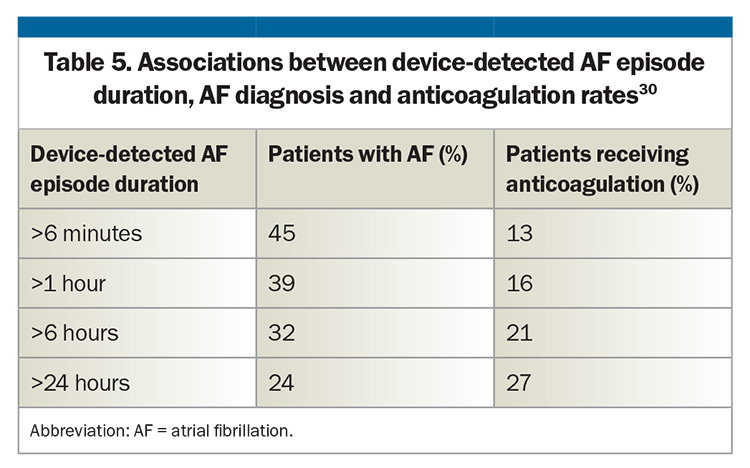
Variation in treatment is also reflected in an observational study of 10,212 veterans with cardiac implantable electronic devices and newly detected AF (Table 5).30 In patients not receiving NOAC therapy, stroke incidence increased with AF burden, with the strongest association for stroke reduction observed in the group with AF episodes lasting more than 24 hours. A reduction in stroke was also seen with oral anticoagulation for device-detected AF lasting more than 24 hours.30 However, these findings are observational and require confirmation in randomised controlled trials.
Anticoagulants and reversal
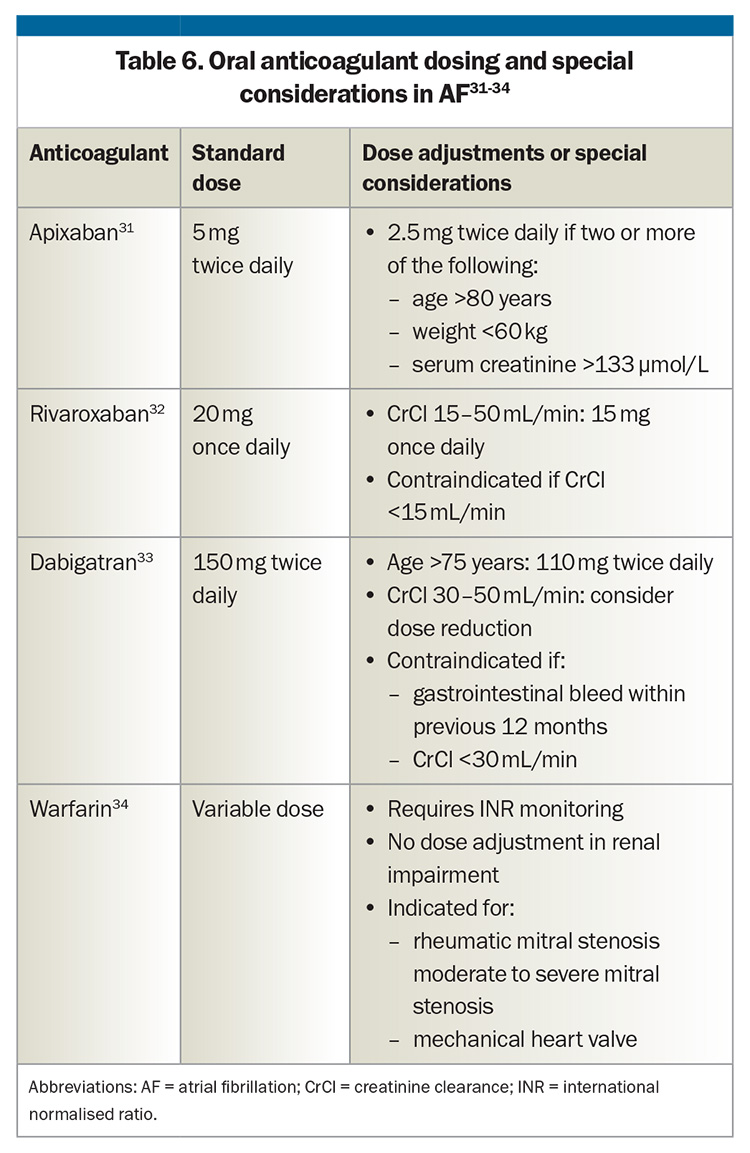
Four oral anticoagulants are currently available in Australia: the NOACs apixaban, rivaroxaban (both direct Factor Xa inhibitors) and dabigatran (a direct thrombin inhibitor), as well as warfarin (a vitamin K antagonist) (Table 6).31-34
Given the bleeding risk associated with mmanticoagulation, availability of reversal agents is relevant to treatment selection and emergency management. Idarucizumab has been approved by the TGA for reversal of dabigatran, and andexanet alfa for reversal of apixaban and rivaroxaban. Warfarin can be reversed, although relatively slowly, with vitamin K.
Idarucizumab was evaluated in a phase 3 open-label trial, Reversal of Dabigatran Anticoagulant Effect With Idarucizumab (RE-VERSE AD), which showed complete reversal of dabigatran activity within four hours in more than 98% of patients, with reversal maintained for 24 hours in most patients. Thrombotic events occurred in 4.8% of patients at 30 days and 6.8% at 90 days.35
Andexanet alfa was studied in patients with acute intracerebral haemorrhage within 15 hours of taking a factor Xa inhibitor. It produced a significantly greater reduction in anti-factor Xa activity than usual care, but thrombotic events were more frequent and there was no significant difference in 30-day mortality.36 It remains unclear whether NOAC prescribing has changed with the availability of these reversal agents, or whether they influence willingness to commence therapy in people at higher bleeding risk.
Other treatment options
For patients at high bleeding risk or who prefer to avoid long-term anticoagulation therapy, the Comparison of Anticoagulation With Left Atrial Appendage Closure After AF Ablation (OPTION) trial showed that left atrial appendage closure was associated with a lower risk of clinically relevant nonmajor bleeding and was noninferior for the composite of death from any cause, stroke or systemic embolism at 36 months compared with oral anticoagulation.37
Role of the GP and future directions
GPs play a crucial role in diagnosing subclinical AF and planning management, as they are often the first point of contact for patients using wearable devices. By staying up-to-date with current guidelines and indications for anticoagulation, and by emphasising a patient-centred approach, GPs can provide safe, practical advice before referral to a specialist. Given device accuracy and ongoing research, it is likely that device-detected AF will not require additional conventional cardiac monitoring in all patients in the future.
A secondary, unvalidated role for GPs is screening for subclinical AF in high-risk patients, including those with dementia or CT imaging showing chronic embolic changes. Supporting this possibility, one study reported a slightly higher risk of dementia in people with AF than in those without, along with a lower incidence of dementia in those treated with oral anticoagulants.38
Wearable devices may also enable GPs to perform regular cardiac monitoring for patients in rural and remote areas who cannot attend frequent in-person consultations for conventional prolonged monitoring. This may improve detection rates and support earlier treatment.
Looking ahead, artificial intelligence is likely to become more common in this space. Machine learning models may be able to integrate guideline criteria and individual risk factors to identify patients who require confirmatory testing or anticoagulation. Large-scale population-based screening studies will also continue to assess device accuracy and subclinical AF detection. There is also potential for artificial intelligence algorithms to predict AF onset, enabling patients to present proactively for early management; however, this has not yet been demonstrated.
Conclusion
Wearable devices are detecting higher rates of subclinical AF, raising important questions for patients, GPs and cardiologists. Although short episodes of device-detected AF are common, current evidence does not provide conclusive recommendations for anticoagulation in all patients. Until clearer thresholds are defined, GPs should focus on individual stroke and bleeding risks, and incorporate shared decision-making when managing subclinical AF. CT
COMPETING INTERESTS: None.
References
1. Van Gelder IC, Rienstra M, Bunting KV, et al. 2024 ESC guidelines for the management of atrial fibrillation. Eur Heart J 2024; 45: 3314-3414.
2. Wong JA, Conen D, Van Gelder IC, et al. Progression of device-detected subclinical atrial fibrillation and the risk of heart failure. J Am Coll Cardiol 2018; 71: 2603-2611.
3. Joglar JA, Chung MK, Armbruster AL, et al. 2023 ACC/AHA/ACCP/HRS guideline for the diagnosis and management of atrial fibrillation: a report of the American College of Cardiology/American Heart Association Joint Committee on Clinical Practice Guidelines. Circulation 2024; 149: e1-e156.
4. Lane DA, Lip GYH. Use of the CHAD2S2VASc and HAS-BLED scores to aid decision making for thromboprophylaxis in nonvalvular atrial fibrillation. Circulation 2012; 126: 860-865.
5. Apostolakis S, Lane DA, Guo Y, Buller H, Lip GYH. Performance of the HEMORR2HAGES, ATRIA, and HAS-BLED bleeding risk–prediction scores in patients with atrial fibrillation undergoing anticoagulation: the AMADEUS study. J Am Coll Cardiol 2012; 60: 861-867.
6. Lane DA, Skjøth F, Lip GYH, Larsen TB, Kotecha D. Temporal trends in incidence, prevalence, and mortality of atrial fibrillation in primary care. J Am Heart Assoc 2017; 6. e005155.
7. Hart RG, Pearce LA, Aguilar MI. Meta-analysis: antithrombotic therapy to prevent stroke in patients who have nonvalvular atrial fibrillation. Ann Intern Med 2007; 146: 857-867.
8. Sanna T, Diener HC, Passman RS, et al. Cryptogenic stroke and underlying atrial fibrillation. N Engl J Med 2014; 370: 2478-2486.
9. Hart RG, Sharma M, Mundl H, et al. Rivaroxaban for stroke prevention after embolic stroke of undetermined source. N Engl J Med 2018; 378: 2191-2201.
10. Kirchhof P, Camm AJ, Goette A, et al. Early rhythm-control therapy in patients with atrial fibrillation. N Engl J Med 2020; 383: 1305-1316.
11. Gladstone DJ, Spring M, Dorian P, et al. Atrial fibrillation in patients with cryptogenic stroke. N Engl J Med 2014; 370: 2467-2477.
12. Wachter R, Gröschel K, Gelbrich G, et al. Holter-electrocardiogram-monitoring in patients with acute ischaemic stroke (Find-AFRANDOMISED): an open-label randomised controlled trial. Lancet Neurol 2017; 16: 282-290.
13. Healey JS, Connolly SJ, Gold MR, et al. Subclinical atrial fibrillation and the risk of stroke. N Engl J Med 2012; 366: 120-129.
14. Svennberg E, Friberg L, Frykman V, Al-Khalili F, Engdahl J, Rosenqvist M. Clinical outcomes in systematic screening for atrial fibrillation (STROKESTOP): a multicentre, parallel group, unmasked, randomised controlled trial. Lancet 2021; 398: 1498-1506.
15. Svendsen JH, Diederichsen SZ, Højberg S, et al. Implantable loop recorder detection of atrial fibrillation to prevent stroke (The LOOP Study): a randomised controlled trial. Lancet 2021; 398: 1507-1516.
16. Boriani G, Glotzer TV, Santini M, et al. Device-detected atrial fibrillation and risk for stroke: an analysis of >10,000 patients from the SOS AF project (Stroke preventiOn Strategies based on Atrial Fibrillation information from implanted devices). Eur Heart J 2014; 35: 508-516.
17. Tamura T, Maeda Y, Sekine M, Yoshida M. Wearable photoplethysmographic sensors—past and present. Electronics 2014; 3: 282-302.
18. Castaneda D, Esparza A, Ghamari M, Soltanpur C, Nazeran H. A review on wearable photoplethysmography sensors and their potential future applications in health care. Int J Biosens Bioelectron 2018; 4: 195-202.
19. Pereira T, Tran N, Gadhoumi K, et al. Photoplethysmography based atrial fibrillation detection: a review. NPJ Digit Med 2020; 3: 3.
20. Dörr M, Nohturfft V, Brasier N, et al. The WATCH AF Trial: SmartWATCHes for Detection of Atrial Fibrillation. JACC Clin Electrophysiol 2019; 5: 199-208.
21. Lubitz SA, Faranesh AZ, Selvaggi C, et al. Detection of atrial fibrillation in a large population using wearable devices: the Fitbit Heart study. Circulation 2022; 146: 1415-1424.
22. Guo Y, Wang H, Zhang H, et al. Mobile photoplethysmographic technology to detect atrial fibrillation. J Am Coll Cardiol 2019; 74: 2365-2375.
23. Perez MV, Mahaffey KW, Hedlin H, et al. Large-scale assessment of a smartwatch to identify atrial fibrillation. N Engl J Med 2019; 381: 1909-1917.
24. Halcox JPJ, Wareham K, Cardew A, et al. Assessment of remote heart rhythm sampling using the AliveCor heart monitor to screen for atrial fibrillation. Circulation 2017; 136: 1784-1794.
25. Lau JK, Lowres N, Neubeck L, et al. iPhone ECG application for community screening to detect silent atrial fibrillation: a novel technology to prevent stroke. Int J Cardiol 2013; 165: 193-194.
26. Mairesse GH, Moran P, Van Gelder IC, et al. Screening for atrial fibrillation: a European Heart Rhythm Association (EHRA) consensus document endorsed by the Heart Rhythm Society (HRS), Asia Pacific Heart Rhythm Society (APHRS), and Sociedad Latinoamericana de Estimulación Cardíaca y Electrofisiología (SOLAECE). Europace 2017; 19: 1589-1623.
27. Kirchhof P, Toennis T, Goette A, et al. Anticoagulation with edoxaban in patients with atrial high-rate episodes. N Engl J Med 2023; 389: 1167-1179.
28. Healey JS, Lopes RD, Granger CB, et al. Apixaban for stroke prevention in subclinical atrial fibrillation. N Engl J Med 2023; 390: 107-117.
29. McIntyre WF, Benz AP, Becher N, et al. Direct oral anticoagulants for stroke prevention in patients with device-detected atrial fibrillation: a study-level meta-analysis of the NOAH-AFNET 6 and ARTESiA trials. Circulation 2023; 149: 981-988.
30. Perino AC, Fan J, Askari M, et al. Practice variation in anticoagulation prescription and outcomes after device-detected atrial fibrillation. Circulation 2019; 139: 2502-2512.
31. Australian Medicines Handbook (AMH). Apixaban. In: Australian Medicines Handbook 2026. Adelaide: Australian Medicines Handbook Pty Ltd; 2026.
32. Australian Medicines Handbook (AMH). Rivaroxaban. In: Australian Medicines Handbook 2026. Adelaide: Australian Medicines Handbook Pty Ltd; 2026.
33. Australian Medicines Handbook (AMH). Dabigatran. In: Australian Medicines Handbook 2026. Adelaide: Australian Medicines Handbook Pty Ltd; 2026.
34. Australian Medicines Handbook (AMH). Warfarin. In: Australian Medicines Handbook 2026. Adelaide: Australian Medicines Handbook Pty Ltd; 2026.
35. Pollack CV, Reilly PA, Eikelboom J, et al. Idarucizumab for dabigatran reversal. N Engl J Med 2015; 373: 511-520.
36. Connolly SJ, Sharma M, Cohen AT, et al. Andexanet for factor xa inhibitor–associated acute intracerebral hemorrhage. N Engl J Med 2024; 390: 1745-1755.
37. Wazni OM, Saliba WI, Nair DG, et al. Left atrial appendage closure after ablation for atrial fibrillation. N Engl J Med 2024; 392: 1277-1287.
38. Nah MA, Lee KS, Hwang TY. Association between atrial fibrillation and the risk of dementia in the Korean elderly: a 10-year nationwide cohort study. J Prev Med Public Health 2020; 53: 56-63.
Single article purchases are temporarily unavailable due to site maintenance.
If you would like to purchase an article during this time, please email us at [email protected] with the article details and we'll assist you directly. We'll also let you know when online purchasing is available again.
Thank you for your patience and understanding.