
‘Goodnight, sweetheart’: wake up to a new paradigm for lipid-lowering therapy

A new paradigm for lipid-lowering therapy involves early initiation of upfront statin and ezetimibe combination therapy for patients at high or very high risk of cardiovascular disease. Because there is now substantial evidence for this strategy, it has been included in recent guidelines for lipid lowering.
- Removal of the PBS restrictions on ezetimibe in 2024 has enabled its coprescription with statins without the need for patients to have a prior eight-week period on statin monotherapy.
- Initiating lipid-lowering therapy with combination statin–ezetimibe (the ‘upfront’ approach) is now recommended by international guidelines rather than the traditional ‘stepwise’ approach.
- The upfront approach is particularly important in patients at high and very high risk of cardiovascular disease, especially those with acute coronary syndromes because it rapidly lowers LDL-cholesterol levels, stabilises atherosclerotic plaques and acutely reduces recurrent ischaemic events.
- Upfront ezetimibe–statin cotherapy may also be appropriate for initiating lipid-lowering therapy in patients at lower cardiovascular disease risk, as it allows lower doses of statins to be used with fewer side effects, improved compliance, fewer blood tests and clinic visits, and LDL-cholesterol lowering equivalent to that of maximum statin doses.
It’s time to say ‘Goodnight, sweetheart’ to statin monotherapy for our patients at high risk of cardiovascular disease (CVD).
The recently published SWEDEHEART (Swedish Web-system for Enhancement and Development of Evidence-based care in Heart disease Evaluated According to Recommended Therapies) study illustrated the benefits of using early, aggressive lipid-lowering therapy (LLT) in patients with acute coronary syndrome (ACS).1,2 Those receiving early (within 12 weeks) upfront statin and ezetimibe combination therapy had improved outcomes for up to 12 years of follow up compared with patients receiving LLT within 12 to 16 months.1,2 Further details of SWEDEHEART are discussed below.
This new paradigm for LLT involves early initiation of upfront statin and ezetimibe combination therapy for patients at high or very high risk of CVD. Because there is now substantial evidence for this strategy, it has been included in recent guidelines for LLT.3-7 The strategy is also appropriate for patients without ACS, including those with familial hypercholesterolaemia.8-10
Guideline changes
The stepwise approach to lipid lowering was recommended in the European Society of Cardiology (ESC) and European Atherosclerosis Society (EAS) guidelines of 2019.11 In 2021, the International Lipid Expert Panel (ILEP) recommended the upfront approach, as did the Polish Lipid Association (PoLA) for patients at very high and extreme risk for whom maximum statin doses were unlikely to achieve target LDL-cholesterol (LDL-C) levels.12 The rationale for this was to minimise cumulative exposure to LDL-C (a long-term strategy), in contrast to current recommendations for upfront therapy, which are oriented towards acutely reducing ACS events through plaque passivation and lower risk of plaque rupture.12
In 2023, the ESC guideline for patients with ACS stated that upfront LLT ‘may be considered’.13 In 2024, ILEP recommended upfront LLT for patients with established atherosclerotic CVD, and also for patients with ACS, triple upfront therapy with statins, ezetimibe and either proprotein convertase subtilisin/kexin type 9 (PCSK9) inhibitors or bempedoic acid (the latter is not currently available in Australia).12 Single-pill combinations were also recommended to improve compliance.12
The PoLA is conducting an ACS registry of patients requiring angioplasty, with currently 72,050 enrolled in the study.12 Routine upfront LLT is now recommended for these patients after preliminary findings reported a 47% reduction in all-cause mortality within 52 days.12
The 2025 ESC/EAS lipid management guidelines also recommended upfront statin–ezetimibe LLT during hospital admission for statin-naïve patients with ACS who are not expected to reach the LDL-C goal with statin monotherapy. Patients on statins before admission also require intensification of LLT.11
Estimating CVD risk
An important consideration for upfront combined LLT is that there are likely to be considerably more patients at high risk of CVD in our practices than currently recognised.14-17 Such patients may be detected using risk factor algorithms, with the caveat that they often underestimate CVD risk and imaging techniques are more sensitive, reproducible and reliable.18 Use of coronary artery calcium (CAC) measurement for detecting and quantifying asymptomatic subclinical atherosclerosis is a widely used and validated tool for improving prediction of coronary heart disease risk and is more accurate and cost-effective than using traditional risk factors.19-24 Paradoxically, CAC assessment is not yet a Medicare item, although considerable effort is being made to address this situation.
SWEDEHEART findings
SWEDEHEART involved Sweden’s nationwide registry of patients admitted to hospital with myocardial infarction between 2015 and 2022.1,2 This registry had previously shown that on optimal statin monotherapy, only 20 to 25% of patients reached LDL-C goals. Using modelling of expected LDL-C levels from treatment escalation, this proportion doubled if ezetimibe were added. All patients reached LDL-C goals if PCSK9 inhibitors were added.1,2 The authors hypothesised that patients who achieved the non-HDL-cholesterol (non-HDL-C) target of less than 2.2 mmol/L (equivalent to 1.4 mmol/L LDL-C) early after myocardial infarction and in whom the target was sustained would have the best outcomes compared with later or delayed achievement.1,2
SWEDEHEART enrolled over 56,000 patients and determined CVD outcomes after a mean of 5.4 years’ follow up in relation to timing and intensity of non-HDL-C lowering (Figure 1).1 Subjects were classified into three groups: those receiving ezetimibe early (within 12 weeks), late (13 weeks to 16 months) or not at all. At three years, there were 14% and 29% higher rates of overall CVD and 64% and 83% higher rates of CVD death in late or nil groups, respectively, compared with early LLT (Figure 1).1
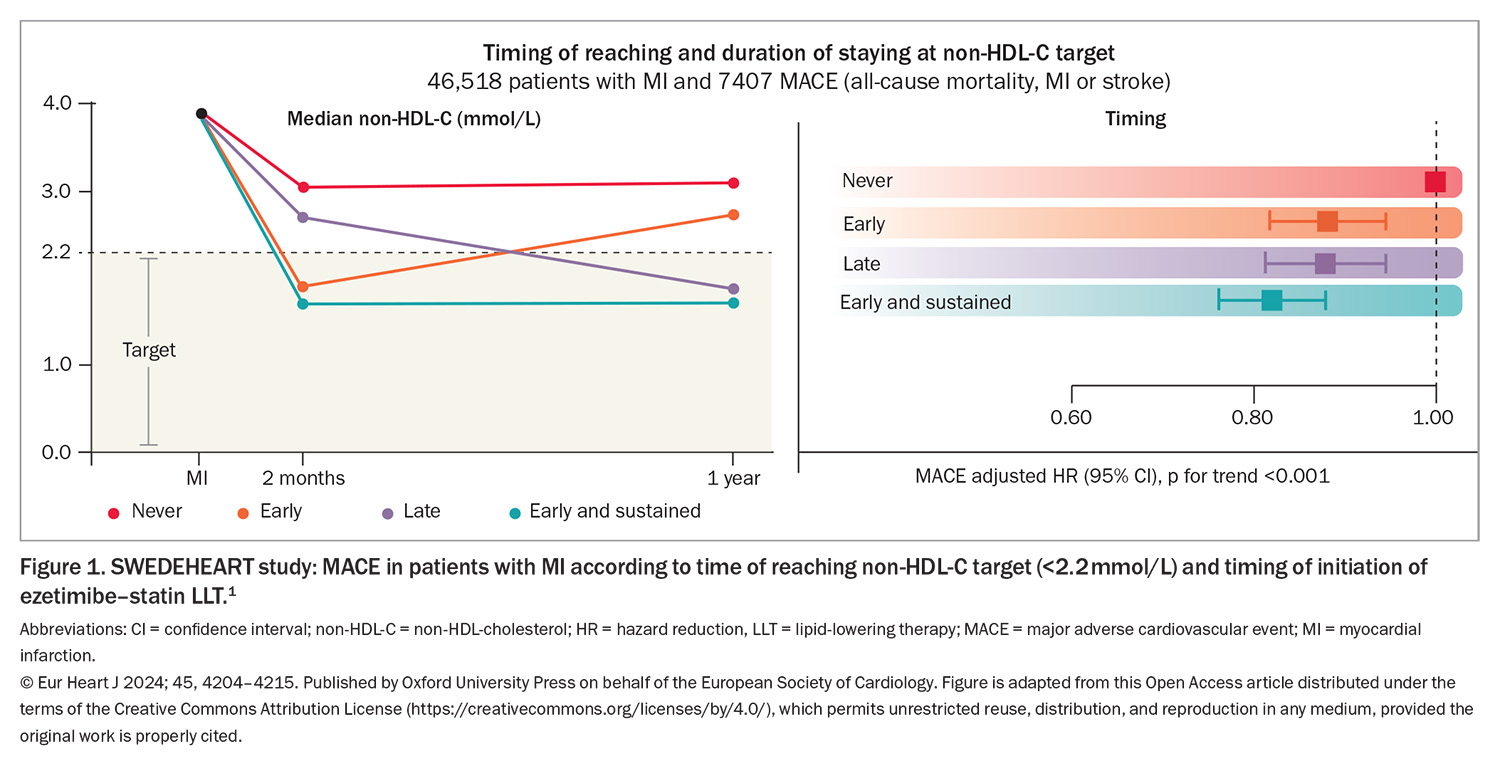
The SWEDEHEART results strongly support the upfront strategy in all statin-naïve patients with ACS predischarge, with early review at two months and the addition of further oral or injectable LLT according to achieved LDL-C levels. Another approach is early triple-therapy LLT with PCSK9 inhibitors, resulting in LDL-C levels less than 1 mmol/L in almost all cases and fewer CVD events.4-6,25
Currently in Australia about 14% of patients with ACS receive PCSK9 inhibitors due to PBS restrictions.26 Use of PCSK9 inhibitors is likely to increase with demonstrable cost-efficacy, especially when oral PCSK9 inhibitors become available.27
In summary, patients on statin monotherapy independent of LDL-C levels could be routinely considered for combined statin and ezetimibe LLT to achieve even lower LDL-C levels and accelerate plaque regression and protection from CVD events.28-35
Explanation behind the upfront strategy
The outcomes of SWEDEHEART and other studies supporting the upfront strategy with combination LLT may be explained by the presence of a high load of unstable plaques in patients with ACS, which can be more effectively passified and less liable to rupture by earlier achievement of lower LDL-C levels.28-35
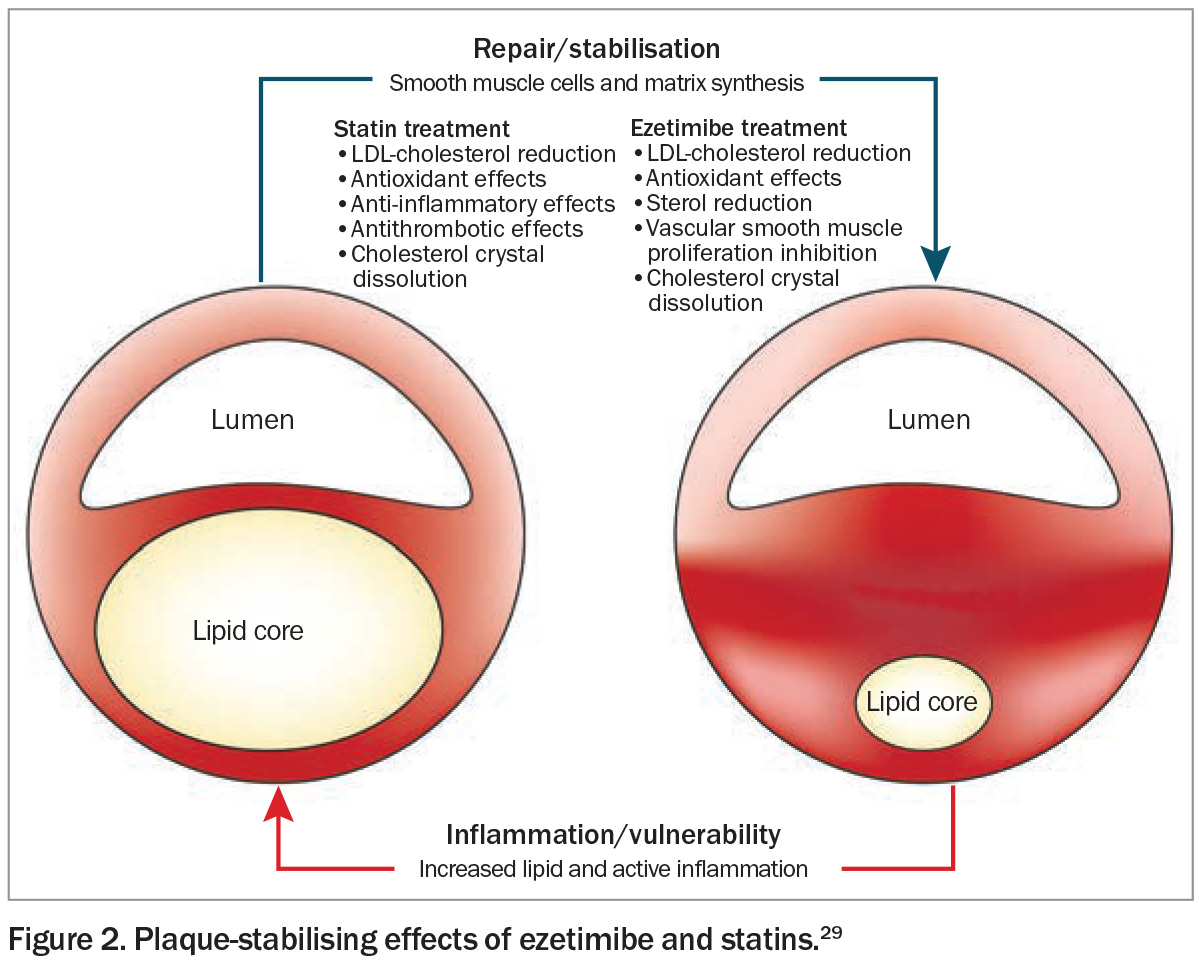
Unstable or high-risk plaques have features that can now be identified by imaging techniques, including the presence of a thin fibrous cap, a large lipid core and remodelling in which the arterial wall expands to conserve the lumen.28-35 Unstable plaques have a high content of active inflammatory cells.35 These secrete macrophage-activating cytokines, initiating foam cell formation, deposition of crystalline cholesterol and promotion of a pro-inflammatory cycle that contributes to plaque progression.35 Central to this process is influx of plasma-derived LDL-C, its subsequent oxidation and evolution of the chronic inflammatory disease called atherosclerosis.28-35 Plaques are metabolically active and capable of considerable regression through risk-factor control, particularly reduction of levels of LDL-C and other atherogenic lipoproteins.28-35
Like statins, ezetimibe has been shown to have antiatherosclerotic pleiotropic effects, in addition to LDL-C lowering (Figure 2).29,36 Reduction in major cardiovascular events has been shown in several trials involving combination statin and ezetimibe LLT, including IMPROVE-IT (IMProved Reduction of Outcomes: Vytorin Efficacy International Trial), EWTOPIA-75 (Ezetimibe Lipid-Lowering Trial on Prevention of Atherosclerotic Cardiovascular Disease in 75 or Older), SHARP (Study of Heart and Renal Protection), CLEAR OUTCOMES (Cholesterol Lowering via Bempedoic Acid, an ACL-Inhibiting Regimen) and SWEDEHEART.1,2,37-41 The RACING (Randomized Comparison of Efficacy and Safety of Lipid-Lowering With Statin Monotherapy Versus Statin/Ezetimibe Combination for High-Risk Cardiovascular Diseases) trial showed no difference in events between moderate-intensity statin and ezetimibe cotherapy versus high-intensity statin therapy.42
Main points from SWEDEHEART and LLT trials
The main points from SWEDEHEART and other LLT trials are listed below.
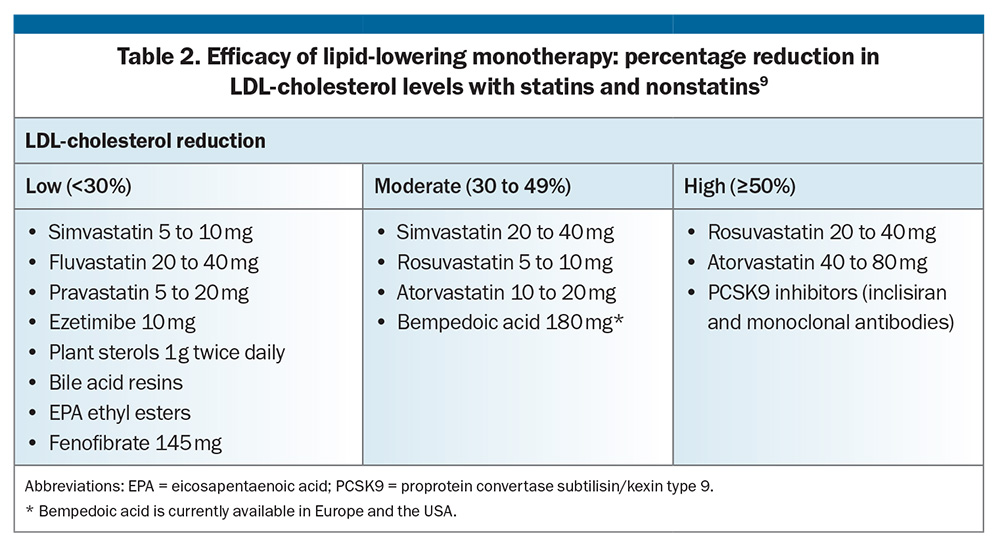
- Ezetimibe, when used in combination with low- to moderate-statin doses, results in LDL-C lowering equivalent to maximal doses of statins. Therefore, a ‘statin-sparing’ approach may be used by initiating therapy with lower statin doses, which will hopefully improve compliance because of less severe and less frequent side effects from upfront combination statin and ezetimibe LLT.43
- The benefits of LDL-C levels depend on the extent of LDL-C reduction, its duration and the age at which patients begin LLT. The axiom, ‘Sooner, Longer, Lower’ summarises this paradigm.44
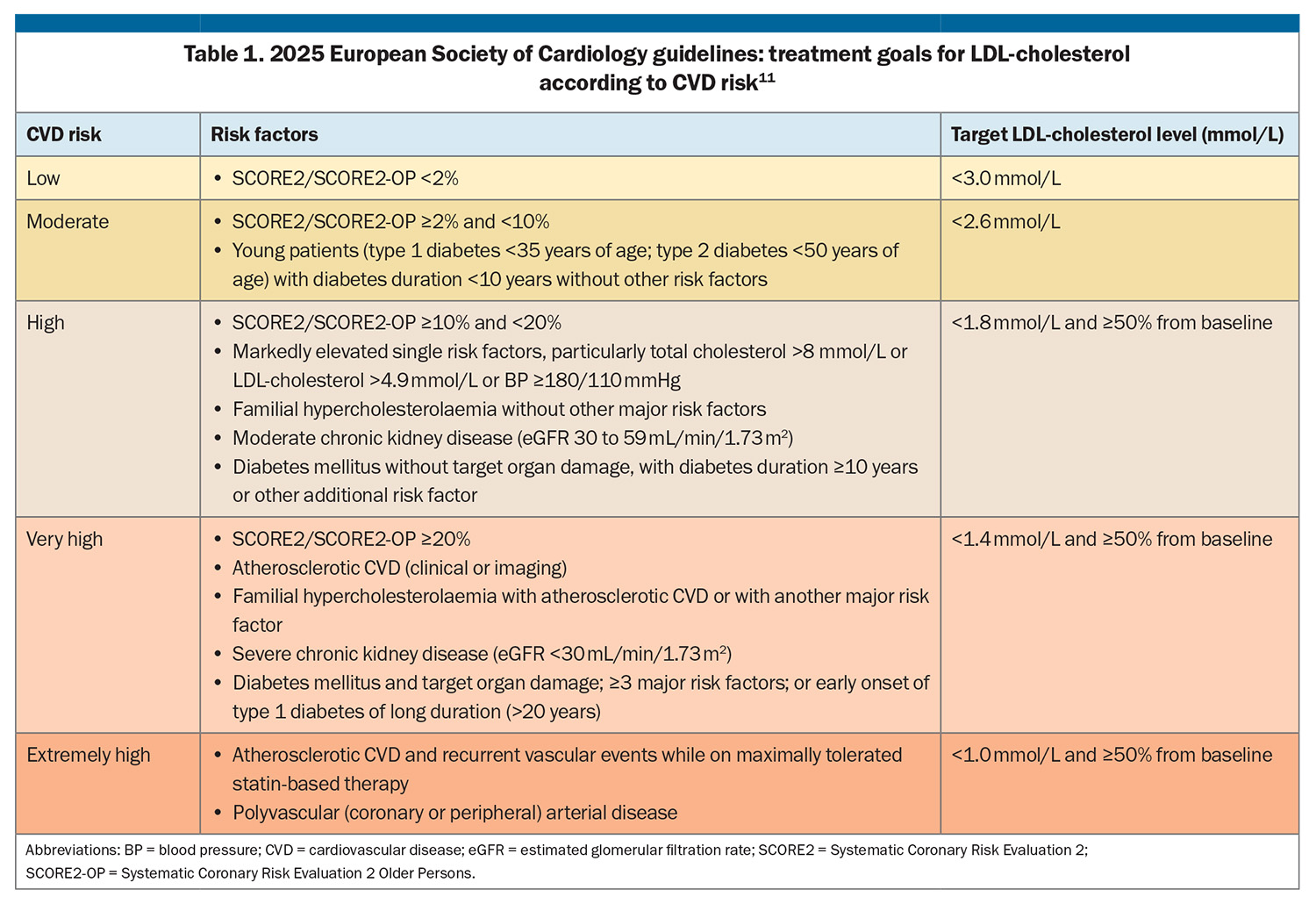
- Recent trials have emphasised the ‘Lower is Better’ approach with lower recommended target LDL-C levels (below 1.0 mmol/L) in patients at very high risk of CVD (Table 1).11
- The relationship between achieved LDL-C levels and coronary heart disease events is linear and continuous, with no threshold for lack of benefit to levels below 0.5 mmol/L using current therapy.45 The same relationship applies to the regression of atherosclerotic lesions, with regression generally occurring more often than progression when LDL-C levels are less than 0.75 mmol/L.46
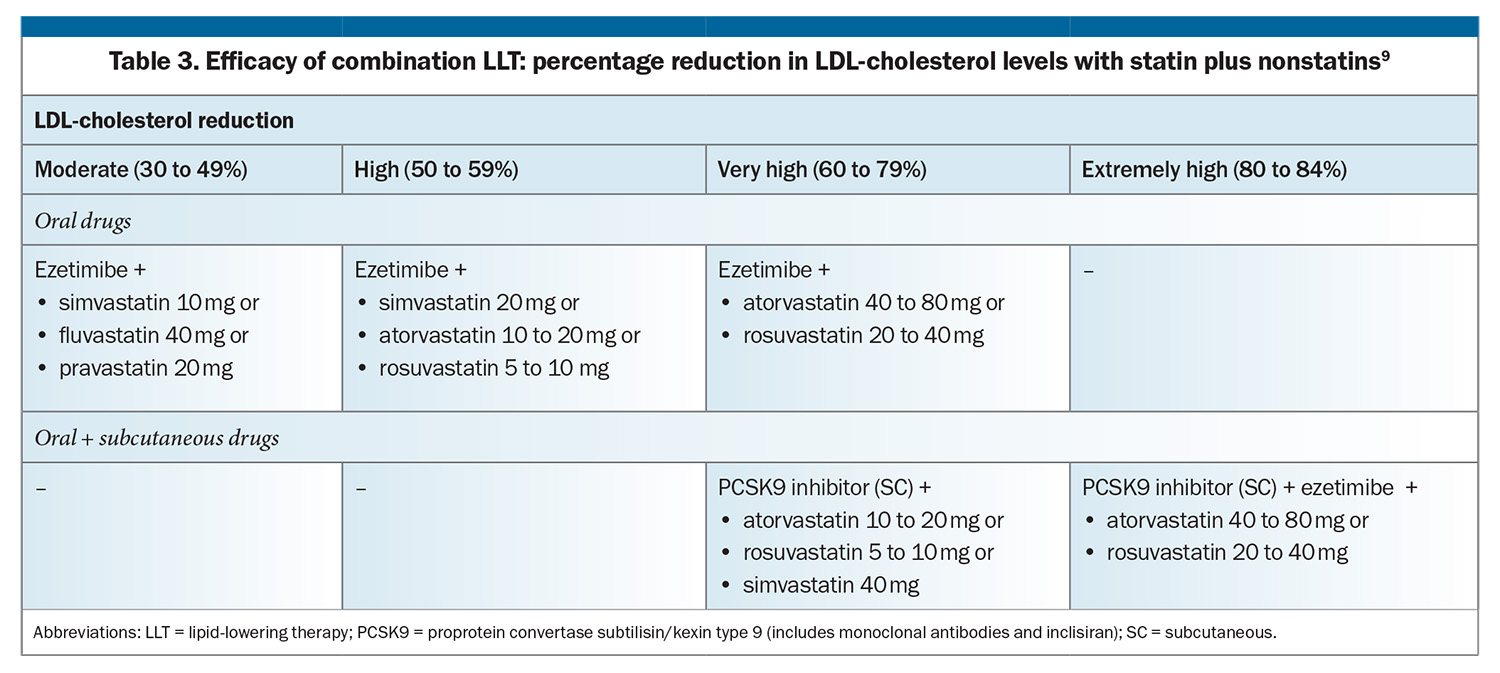
- LDL-C levels below 0.5 mmol/L are now possible using triple therapy with high-dose statins in combination with ezetimibe and PCSK9 inhibitors.47 Clinicians can now decide quite accurately the LDL-C level they wish to achieve, by adjusting the doses of LLT (Table 2 and Table 3).9
- Current LDL-C targets may therefore be regarded as conservative, with many cardiologists treating patients well below consensus guidelines for various categories of CVD risk. This paradigm for LDL reduction may be called ‘Lowest is Better’, using lower-than-recommended targets. Others prefer to use current guidelines, which do not yet recognise the ‘Lowest is Better’ approach until they can be established by randomised trials.
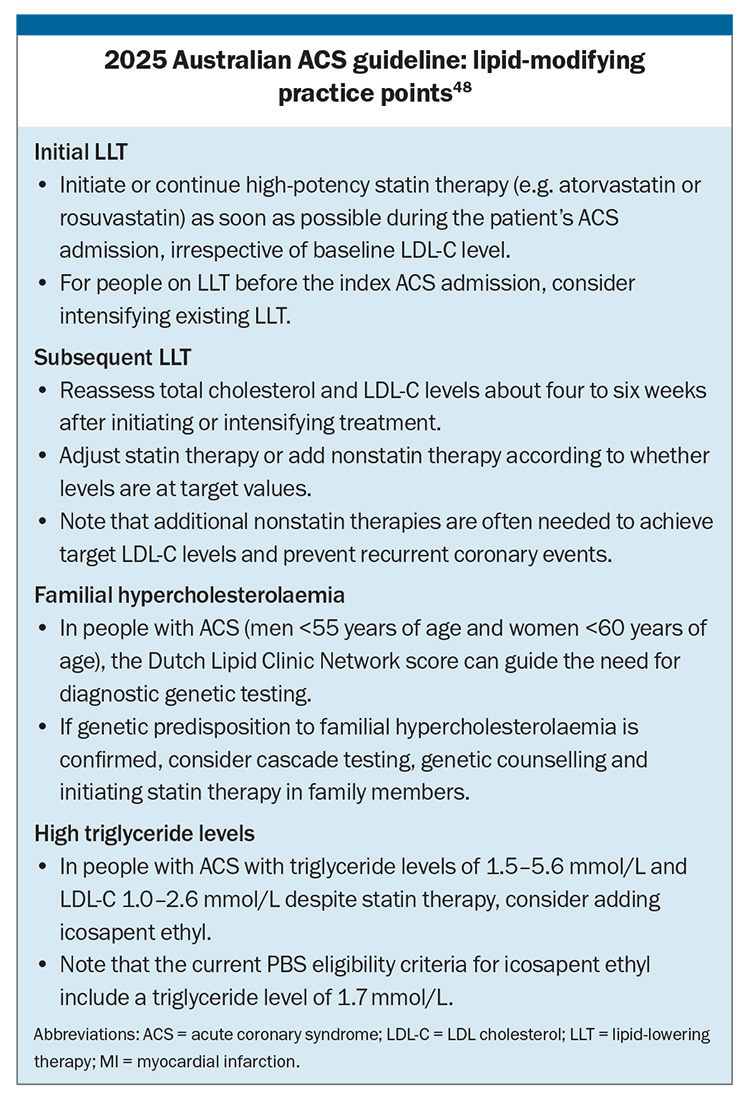
The 2025 National Heart Foundation of Australia & Cardiac Society of Australia and New Zealand (CSANZ) comprehensive guidelines for patients with ACS still use the stepwise approach to LLT (Box).48 These may be modified in the future to include the upfront strategy.49
Concluding comments: the bedtime story
At the August 2025 CSANZ annual scientific conference imaging and preventive cardiology were among the main themes. Imaging and LLT were linked as key drivers for identifying and treating high-risk patients in presentations such as: ‘Are cardiovascular risk assessment tools predictive for coronary plaque burden?’ The key speakers recommended changes to Medicare to allow greater access to CAC and CT coronary angiography for general practitioners, particularly in regional and remote areas, and use of the upfront LLT strategies described above.
A 2025 meta-analysis of the ILEP investigators that included 108,373 patients at very high risk of CVD showed that statin–ezetimibe cotherapy resulted in overall greater reduction in LDL-C, the same risk of adverse effects and significantly lower risk of all-cause mortality, major adverse cardiovascular events and stroke compared with statin monotherapy. Combination therapy reduced mean LDL-C levels by about 20% compared with monotherapy, and there were significant reductions in major cardiovascular events by 18%, stroke by 17% and all-cause mortality by 18%. Adverse events and the therapy discontinuation rate were comparable in the two groups. The investigators concluded: ‘Combination LLT should be considered at the outset of therapy initiation to maximize LDL-C goal attainment and improve reduction in hard CVD end points.’12 These issues are emphasised in the updated 2025 ESC/EAS guidelines.11
There are no longer PBS restrictions on ezetimibe prescribing, so ezetimibe can be coprescribed with a statin without the need for a prior eight-week period on statin monotherapy.50 So, let’s put to bed some of our older ideas for lipid lowering and wake up to the current paradigm of starting therapy for patients at high CVD risk with combined statin and ezetimibe LLT rather than statin monotherapy, and put this into practice to achieve lower LDL-C levels, greater plaque regression and improved protection from CVD events. CT
COMPETING INTERESTS: Professor Hamilton-Craig has received payment from CSL Seqirus for presentations, and is Chair of the South Australian Lipid Group, sponsored by Amgen (Australia) and CSL Seqirus (Australia).
References
1. Schubert S, Leosdttir M, Lindahl B, et al. Intensive early and sustained lowering of non–high-density lipoprotein cholesterol after myocardial infarction and prognosis: the SWEDEHEART registry. Eur Heart J 2024; 45: 4204-4215.
2. Leosdottir M, Schubert J, Brandts J, et al. Early ezetimibe initiation after myocardial infarction protects against later cardiovascular outcomes in the SWEDEHEART Registry. J Am Coll Cardiol 2025; 85: 1550-1564.
3. Cannon CP, Blazing MA, Giugliano RP, et al; IMPROVE-IT Investigators. Ezetimibe added to statin therapy after acute coronary syndromes. N Engl J Med 2015; 372: 2387-2397.
4. Justino GB, Justino LB, Müller ME, et al. Early initiation of PCSK9 inhibitor therapy versus placebo in patients with acute coronary syndrome: a systematic review and meta-analysis. Am J Cardiol 2024; 213: 110-118.
5. Schwartz GG, Steg PG, Szarek M, et al; ODYSSEY OUTCOMES Committees and Investigators. Alirocumab and cardiovascular outcomes after acute coronary syndrome. N Engl J Med 2018; 379: 2097-2107
6. Koskinas KC, Windecker S, Pedrazzini G, et al. Evolocumab for early reduction of LDL cholesterol levels in patients with acute coronary syndromes (EVOPACS). J Am Coll Cardiol 2019; 74: 2452-2462.
7. Masana L, Ibarretxe D, Plana N. Reasons why combination therapy should be the new standard of care to achieve the LDL-cholesterol targets: lipid-lowering combination therapy. Curr Cardiol Rep 2020; 22: 66.
8. Lee SH, Lee YJ, Heo JH, et al. Combination moderate-intensity statin and ezetimibe therapy for elderly patients with atherosclerosis. J Am Coll Cardiol 2023; 81: 1339-1349.
9. Hamilton-Craig IR, Hamilton-Craig CR. Lipid-lowering therapy for older people: update on prescribing. Medicine Today 2024; 25(3): 49-58.
10. Hamilton-Craig I, Kostner K, Colquhoun D, Woodhouse S. Combination therapy of statin and ezetimibe for the treatment of familial hypercholesterolemia. Vasc Health Risk Manag 2010; 6: 1023-1037.
11. Mach F, Koskinas KC, Roeters van Lennep JE, et al; ESC/EAS Scientific Document Group. 2025 focused update of the 2019 ESC/EAS guidelines for the management of dyslipidaemias: developed by the task force for the management of dyslipidaemias of the European Society of Cardiology (ESC) and the European Atherosclerosis Society (EAS). Eur Heart J 2025; ehaf190: https://doi.org/10.1093/eurheartj/ehaf190.
12. Banach M, Jaiswal V, Ang SP, et al; Lipid and Blood Pressure Meta-analysis Collaboration (LBPMC) Group and the International Lipid Expert Panel (ILEP). Impact of lipid-lowering combination therapy with statins and ezetimibe vs statin monotherapy on the reduction of cardiovascular outcomes: a meta-analysis. Mayo Clin Proc 2025; Mar 20: S0025-6196(25)00075-8.
13. Byrne RA, Rossello X, Coughlan JJ, et al. 2023 ESC guidelines for the management of acute coronary syndromes. Eur Heart J 2023; 44: 3720-3826.
14. Hippisley-Cox J, Coupland C. Incidence and prevalence of cardiovascular disease in English primary care: a cross-sectional study using the Royal College of General Practitioners Research and Surveillance Centre database. BMJ Open 2018; 8: e020282.
15. Soljak M, Kingston M, van Staa T, et al. Missed opportunities in prevention of cardiovascular disease in primary care: cross-sectional study of anonymised patient records. Br J Gen Pract 2014; 64: e38-e46.
16. Cooper J, Jackson T, Haroon S, Crowe FL, et al. Defining phenotypes of disease severity for long-term cardiovascular, renal, metabolic, and mental health conditions in primary care electronic health records: a mixed-methods study using the nominal group technique. J Biomed Inform 2025; 166: 104831.
17. Olsson M, Johansson I, Bergström G, et al. Traditional and non-traditional cardiovascular risk factor profiles in young patients with coronary artery disease. Prog Cardiovasc Dis 2024; 89: 100-112.
18. Lloyd-Jones DM, Leip EP, D’Agostino RB, et al. Lifetime risk for developing cardiovascular disease. Circulation 2006; 113: 791-798.
19. Roberts ET, Horne A, Martin SS, et al. Cost-effectiveness of coronary artery calcium testing for coronary heart and cardiovascular disease risk prediction to guide statin allocation: the Multi-Ethnic Study of Atherosclerosis (MESA). PLoS One. 2015; 10: e0116377.
20. McClelland RL, Jorgensen NW, Budoff M, et al. 10-Year coronary heart disease risk prediction using coronary artery calcium and traditional risk factors: the MESA risk score. J Am Coll Cardiol 2015; 66: 1643-1653
21. Gao J-W, Guo, Q, Weng Y, et al. Predicting the risk of coronary artery calcium progression in the general population: insights from the MESA and CARDIA studies. Clin Radiol 2025; 80: 106724.
22. Bell KJL, White S, Hassan O, et al. Evaluation of the incremental value of a coronary artery calcium score beyond traditional cardiovascular risk assessment: a systematic review and meta-analysis. JAMA Intern Med 2022; 182: 634-642. [Erratum in: JAMA Intern Med 2022; 182: 1015.]
23. Khan SS, Post WS, Guo X, et al. Coronary artery calcium score and polygenic risk score for the prediction of 25 coronary heart disease events. JAMA 2023; 329: 1768-1777.
24. Nasir K, Budoff MJ, Wong ND, et al. Family history of premature coronary heart disease and coronary artery calcification: Multi-Ethnic Study of Atherosclerosis (MESA). Circulation 2007; 116: 619-626.
25. Räber L, Ueki Y, Otsuka T, et al; PACMAN-AMI collaborators. Effect of alirocumab added to high-intensity statin therapy on coronary atherosclerosis in patients with acute myocardial infarction: the PACMAN-AMI randomized clinical trial. JAMA 2022; 327: 1771-1781.
26. He WB, Jape D, Nanayakkara S, Shaw JA. Proprotein convertase subtilisin/kexin type 9 inhibitor eligibility and prescription rates in patients presenting with recurrent acute coronary syndromes. Heart Lung Circ 2024; 33: 1638-1647.
27. Agarwala A, Asim R, Ballantyne CM. Oral PCSK9 inhibitors. Curr Atheroscler Rep 2024; 26: 147-152.
28. Tsujita K, Sugiyama S, Sumida H, et al; PRECISE–IVUS Investigators. Impact of dual lipid-lowering strategy with ezetimibe and atorvastatin on coronary plaque regression in patients with percutaneous coronary intervention: the multicenter randomized controlled PRECISE-IVUS trial. J Am Coll Cardiol 2015; 66: 495-507.
29. Crea F, Niccoli G. Ezetimibe and plaque progression: cholesterol lowering or pleiotropic effects? J Am Coll Cardiol 2015; 66: 508-510.
30. West AM, Anderson JD, Meyer CH, et al. The effect of ezetimibe on peripheral arterial atherosclerosis depends upon statin use at baseline. Atherosclerosis 2011; 218: 156-162.
31. Hougaard M, Hansen HS, Thayssen P, et al. Influence of ezetimibe in addition to high-dose atorvastatin therapy on plaque composition in patients with ST-segment elevation myocardial infarction assessed by serial: intravascular ultrasound with iMap; the OCTIVUS trial. Cardiovasc Revasc Med 2017; 18: 110- 117.
32. Kovarnik T, Mintz GS, Skalicka H, et al. Virtual histology evaluation of atherosclerosis regression during atorvastatin and ezetimibe administration: HEAVEN study. Circ J 2012; 76: 176-183.
33. Loffroy R, Bernard S, Sérusclat A, et al. Noninvasive assessment of the prevalence and characteristics of coronary atherosclerotic plaques by multidetector computed tomography in asymptomatic type 2 diabetic patients at high risk of significant coronary artery disease: a preliminary study. Arch Cardiovasc Dis 2009; 102: 607-615.
34. Dawson LP, Lum M, Nerleker N, Nicholls SJ, Layland J. Coronary atherosclerotic plaque regression: JACC state-of-the-art review. J Am Coll Cardiol 2022 4; 79: 66-82.
35. Ross R. Atherosclerosis--an inflammatory disease. N Engl J Med 1999; 340: 115-216.
36. Wang X, Zhao X, Li L, Yao H, Jiang Y, Zhang J. Effects of combination of ezetimibe and rosuvastatin on coronary artery plaque in patients with coronary heart disease. Heart Lung Circ 2016; 25: 459-465.
37. Baigent C, Landray MJ, Reith C, et al; SHARP Investigators. The effects of lowering LDL cholesterol with simvastatin plus ezetimibe in patients with chronic kidney disease (Study of Heart and Renal Protection): a randomised placebo-controlled trial. Lancet 2011; 377: 2181-2192.
38. Giugliano RP, Cannon CP, Blazing MA; IMPROVE-IT (Improved Reduction of Outcomes: Vytorin Efficacy International Trial) Investigators. Benefit of adding ezetimibe to statin therapy on cardiovascular outcomes and safety in patients with versus without diabetes mellitus: results from IMPROVE-IT (Improved Reduction of Outcomes: Vytorin Efficacy International Trial). Circulation 2018; 137: 1571-1582.
39. Eisen A, Cannon CP, Blazing MA, et al; IMPROVE-IT (IMProved Reduction of Outcomes: Vytorin Efficacy International Trial) Investigators. The benefit of adding ezetimibe to statin therapy in patients with prior coronary artery bypass graft surgery and acute coronary syndrome in the IMPROVE-IT trial. Eur Heart J 2016; 21; 37: 3576-3584.
40. Ouchi Y, Sasaki J, Arai H, et al. Ezetimibe lipid-lowering trial on prevention of atherosclerotic cardiovascular disease in 75 or older (EWTOPIA 75): a randomized, controlled trial. Circulation 2019; 140: 992-1003.
41. Nissen SE, Lincoff AM, Brennan, et al; CLEAR Outcomes Investigators. Bempedoic acid and cardiovascular outcomes in statin-intolerant patients. N Engl J Med 2023; 388: 1353-1364.
42. Kim BK, Hong SJ, Lee YJ, et al; RACING Investigators. Long-term efficacy and safety of moderate-intensity statin with ezetimibe combination therapy versus high-intensity statin monotherapy in patients with atherosclerotic cardiovascular disease (RACING): a randomised, open-label, non-inferiority trial. Lancet 2022; 400: 380-390.
43. Bruckert E, Hayem G, Dejager S, Yau C, Begaud B. Mild to moderate muscular symptoms with high-dosage statin therapy in hyperlipidemic patients – the PRIMO study. Cardiovasc Drugs Ther 2005; 19: 403-414.
44. Delahoy PJ, Magliano DJ, Webb K, Grobler M, Liew D. The relationship between reduction in low-density lipoprotein cholesterol by statins and reduction in risk of cardiovascular outcomes: an updated meta-analysis. Clin Ther 2009; 31: 236-244.
45. Karagiannis AD, Mehta A, Dhindsa DS, et al. How low is safe? The frontier of very low (<30 mg/dL) LDL cholesterol. Eur Heart J 2021; 42: 2154-2169.
46. Fujino M, Di Giovanni G, Butters Bhsc J, et al. Achieved levels of apolipoprotein B and plaque composition after acute coronary syndromes: Insights from HUYGENS. Atherosclerosis 2025; 403: 119145.
47. Sabatine MS, Giugliano RP, Keech AC, et al; FOURIER Steering Committee and Investigators. Evolocumab and clinical outcomes in patients with cardiovascular disease. N Engl J Med 2017; 376: 1713-1722.
48. Brieger D, Cullen L, Briffa T, et al. National Heart Foundation of Australia & Cardiac Society of Australia and New Zealand: comprehensive Australian clinical guideline for diagnosing and managing acute coronary syndromes 2025. Heart Lung Circ 2025; 34: 309-397. Also available online at: https://www.heartfoundation.org.au/for-professionals/acs-guideline (accessed September 2025).
49. Hamilton-Craig IR, Psaltis PJ, Marston NA, Nelson AJ. No time to waste: upfront combination lipid lowering therapy post-acute coronary syndrome. Heart Lung Circ 2025. In press.
50. Pharmaceutical Benefits Advisory Committee. Updates to the restrictions for ezetimibe and its fixed dose combinations (FDCs). Canberra: Pharmaceutical Benefits Scheme; 2024. Available online at: https://m.pbs.gov.au/reviews/ezetimibe-fixed-dose-combinations-files/Ezetimibe-may-2024-PBAC-PSD.PDF (accessed October 2025).
Single article purchases are temporarily unavailable due to site maintenance.
If you would like to purchase an article during this time, please email us at [email protected] with the article details and we'll assist you directly. We'll also let you know when online purchasing is available again.
Thank you for your patience and understanding.